
 Español
 Portugues
 Pусский
 Deutsch
 한국어
한국어 العربية
 Italiano
 Svenska
 ไทย
ไทย Türk dili
 Indonesia
 Melayu
 Tiếng Việt
 қазақ
қазақ বাংলা
বাংলা українська
 norsk
norsk Filipino
 o'zbek

CNC milling
CNC Milling: Precision and Efficiency in Modern Manufacturing CNC (Computer Numerical Control) milling is a highly advanced machining process that utilizes computerized controls and rotating multi-point cutting tools to remove material from a workpiece, shaping it into a custom-designed part. This technology has revolutionized manufacturing by offering unparalleled precision, repeatability, and efficiency across industries such as aerospace, automotive, medical, and electronics. How CNC Milling Works The process begins with a digital 3D model created using CAD (Computer-Aided Design) software. The design is then converted into machine-readable instructions (G-code) via CAM (Computer-Aided Manufacturing) software. The CNC milling machine interprets this code to control the movement of the cutting tool along multiple axes (typically 3 to 5 axes), allowing for complex geometries and tight tolerances. Key components of a CNC milling machine include: - Spindle: Rotates the cutting tool at high speeds. - Worktable: Holds the workpiece in place, often with vises or clamps. - Control Panel: Interfaces with the operator to input and adjust machining parameters. - Coolant System: Reduces heat and prolongs tool life. Advantages of CNC Milling 1. Precision: Capable of achieving tolerances as tight as ±0.001 inches (±0.025 mm). 2. Versatility: Works with metals (aluminum, steel, titanium), plastics, and composites. 3. Automation: Reduces human error and enables unattended operation for mass production. 4. Complexity: Produces intricate features like pockets, slots, threads, and 3D contours. 5. Scalability: Ideal for both prototyping and high-volume production. Common Applications - Aerospace: Engine components, turbine blades, and structural parts. - Medical: Implants, surgical instruments, and prosthetics. - Automotive: Transmission parts, molds, and custom fittings. - Electronics: Housings, heat sinks, and circuit board fixtures. Challenges and Considerations While CNC milling offers numerous benefits, challenges include high initial machine costs, the need for skilled programmers, and tool wear management. Proper material selection, toolpath optimization, and maintenance are critical for maximizing efficiency. Future Trends Advancements in AI, IoT-enabled machines, and hybrid additive-subtractive manufacturing are pushing CNC milling toward smarter, more adaptive systems. In summary, CNC milling is a cornerstone of modern manufacturing, delivering precision, flexibility, and efficiency for a wide range of applications. Its continued evolution ensures it will remain indispensable in industrial production.
Products
Category:
-
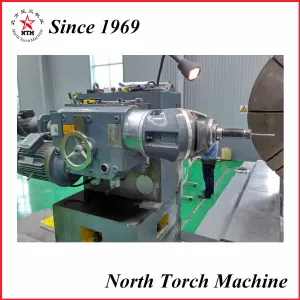
CNC Milling Lathe
Category: Milling Grinding LatheBrowse number: 46Number:Release time: 2025-11-25 13:39:46CNC Milling Lathe: The Backbone of Modern Precision Manufacturing The CNC milling lathe is a cornerstone of modern manufacturing, combining the capabilities of computer numerical control (CNC) technology with the precision of milling and turning operations. This advanced machine tool has revolutionized industries ranging from aerospace to automotive, enabling the production of complex, high-tolerance parts with unmatched efficiency. In this article, we explore the fundamentals of CNC milling lathes, their applications, advantages, and future trends. 1. Understanding CNC Milling La...
News
Category:
-
[Industry news] Heavy lathe machine – How to ensure smooth chip evacuation?
2025-11-26 09:15:26
Case
Category:
No search results found!
Video
Category:
No search results found!
Download
Category:
No search results found!
Job
Category:
No search results found!
Featured Products
-
NEWS
CNC Milling Lathe
Learn more



 Phone
Phone