
 Español
 Portugues
 Pусский
 Deutsch
 한국어
한국어 العربية
 Italiano
 Svenska
 ไทย
ไทย Türk dili
 Indonesia
 Melayu
 Tiếng Việt
 қазақ
қазақ বাংলা
বাংলা українська
 norsk
norsk Filipino
 o'zbek

Conventional Horizontal Machine
Conventional Horizontal Machine: An Overview A conventional horizontal machine is a type of machining tool designed for precision cutting, shaping, and finishing of workpieces. Unlike vertical machines, where the spindle is oriented vertically, horizontal machines feature a horizontally aligned spindle, allowing the cutting tool to approach the workpiece from the side. This configuration offers distinct advantages in stability, chip evacuation, and multi-sided machining, making it suitable for heavy-duty and high-volume production. Key Features and Design The horizontal machine's primary structure consists of a robust base, a horizontal spindle, a worktable, and a column. The spindle holds the cutting tool, which rotates at high speeds to remove material from the workpiece. The worktable moves along the X, Y, and Z axes, enabling precise positioning and complex machining operations. Many horizontal machines also include a rotary table or pallet changer, allowing for multi-sided machining without manual repositioning. Advantages 1. Enhanced Stability – The horizontal spindle orientation lowers the machine's center of gravity, reducing vibration and improving rigidity. This results in better surface finishes and tighter tolerances, especially for heavy or large workpieces. 2. Efficient Chip Evacuation – Chips fall away from the workpiece due to gravity, preventing recutting and minimizing heat buildup. This improves tool life and machining accuracy. 3. Multi-Sided Machining – With rotary tables or indexing capabilities, horizontal machines can machine multiple faces of a part in a single setup, reducing cycle times and improving consistency. 4. High Productivity – Horizontal machines are ideal for batch production, as they often integrate automated pallet changers and tool magazines for uninterrupted operation. Applications Horizontal machines are widely used in industries requiring high precision and efficiency, such as aerospace, automotive, and heavy equipment manufacturing. Common applications include milling, drilling, boring, and tapping of complex components like engine blocks, gearboxes, and structural parts. Limitations While highly versatile, horizontal machines typically require more floor space than vertical machines. Additionally, their initial setup and tooling costs can be higher, making them more suitable for large-scale production rather than small workshops. Conclusion The conventional horizontal machine remains a cornerstone of modern manufacturing due to its stability, efficiency, and ability to handle complex, high-volume machining tasks. Its horizontal spindle design provides distinct advantages in chip management and multi-sided operations, making it indispensable for industries demanding precision and productivity.
Products
Category:
-
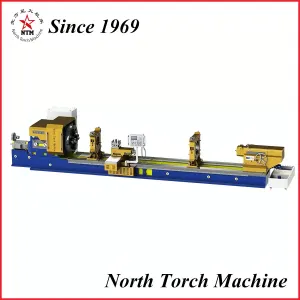
Conventional Horizontal Lathe
Category: Large Horizontal LatheBrowse number: 48Number:Release time: 2025-11-25 13:55:20CX61 Series Large Conventional Horizontal lathe can realize various turning processes, such as the outer circle, end face, inner hole, cutting groove, thread, R arc and other processes, it is also suitable for hard alloy tools for strong turning, processing a variety of ferrous and non-ferrous metals. The main part of the machine tool uses the international advanced computer technology and the optimization finite element analysis method,which make the lathe has a large load capacity, the design is reasonable, the material choice is exquisite.All castings are made of high strength and high grad...
News
Category:
No search results found!
Case
Category:
No search results found!
Video
Category:
No search results found!
Download
Category:
No search results found!
Job
Category:
No search results found!
Featured Products
-
NEWS
Conventional Horizontal Lathe
Learn more



 Phone
Phone